


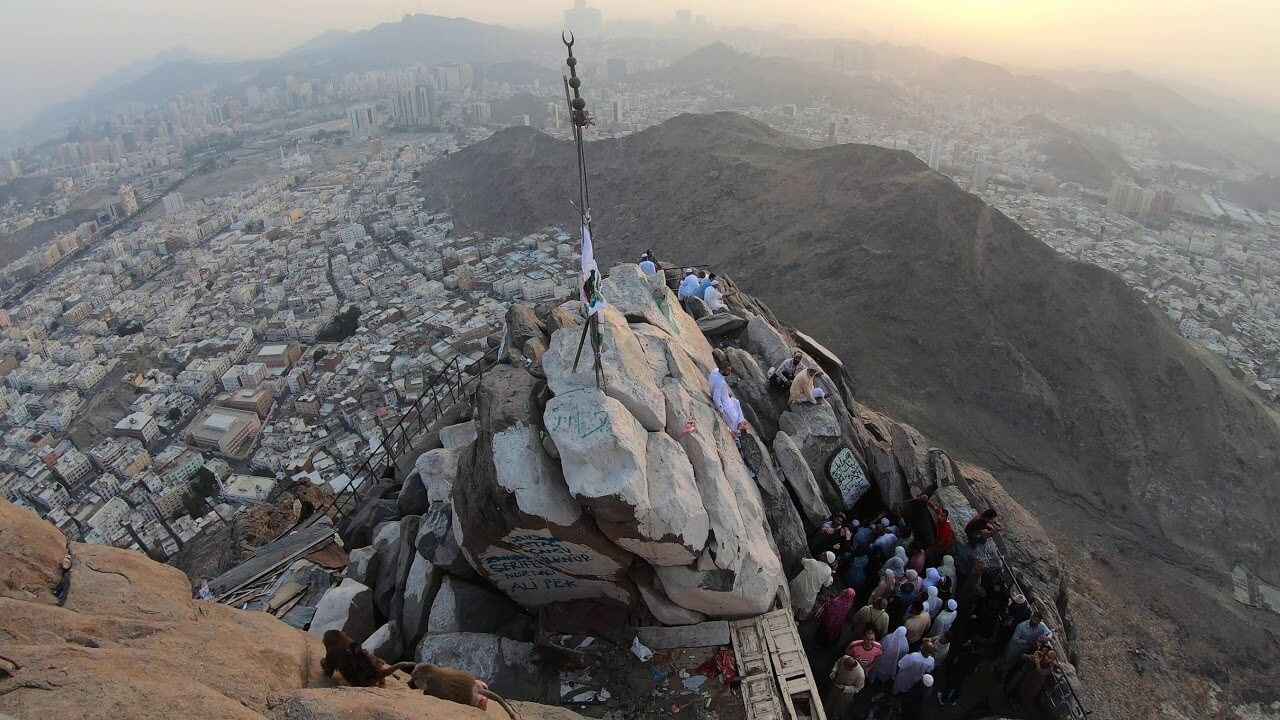
The Cave of Hira (Ghar Hira) is one of the most spiritually significant sites in Islamic history. Located near the summit of Jabal al-Nour (the Mountain of Light) in Makkah, this small cave is where Prophet Muhammad ﷺ received the first revelation of the Holy Quran through Angel Jibreel, marking the beginning of Islam in 610 CE.
Although visiting the Cave of Hira is not an obligation of Hajj or Umrah, it remains one of the most meaningful ziyarat experiences for Muslims seeking reflection, historical connection, and spiritual depth.
What Is the Cave of Hira and Why It Matters?
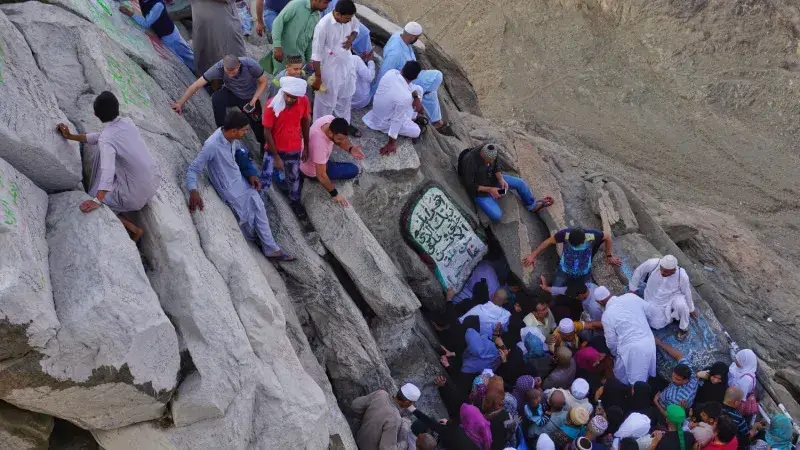
Before Prophethood, Prophet Muhammad ﷺ would frequently withdraw from the noise and idol worship of Makkah to seek solitude and worship Allah. The Cave of Hira became his place of reflection, devotion, and contemplation.
It was here, during the month of Ramadan, that the first verses of Surah Al-Alaq (96:1–5) were revealed, beginning with the command “Iqra” (Read). This moment transformed human history and laid the foundation of Islamic revelation.
Location of the Cave of Hira
The Cave of Hira is situated on Jabal al-Nour, approximately 4 kilometers northeast of Masjid al-Haram. The mountain rises to a height of around 634 meters, and the cave itself is located just below the summit.
The entrance of the cave faces north, and historically, it aligned in the direction of the Kaaba, reinforcing its symbolic significance. Today, the surrounding area is integrated into the expanding city of Makkah, with the Hira Cultural District developed at the mountain’s base to educate visitors about the revelation and the Seerah.
History of Ghar Hira and the First Revelation
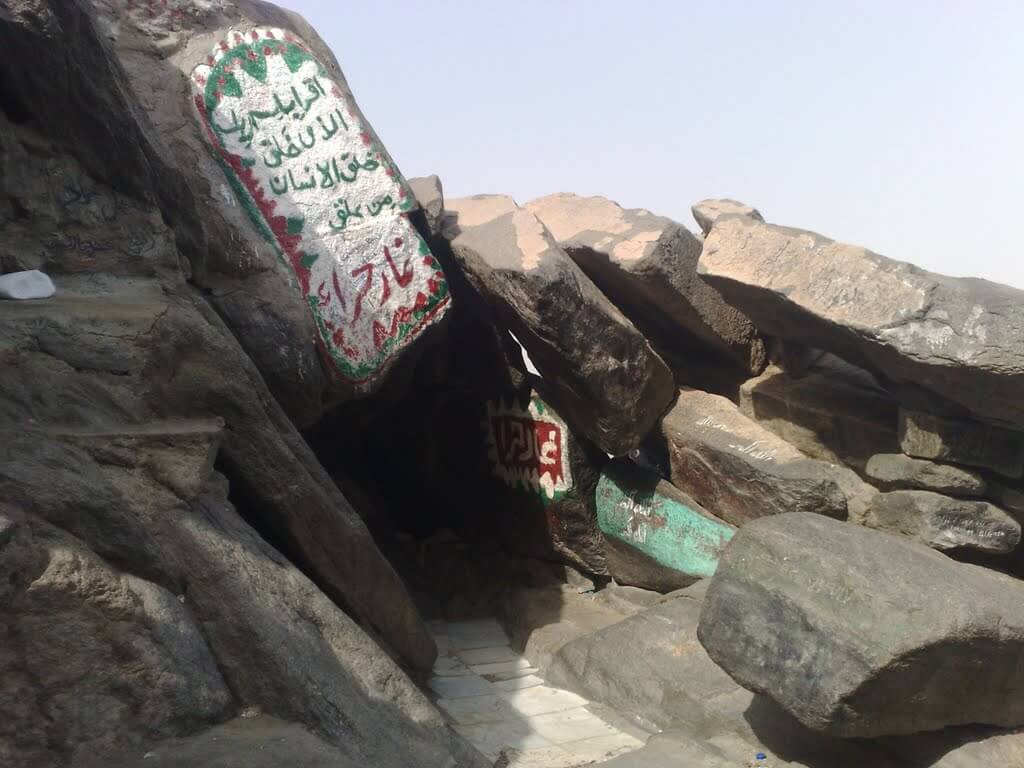
At the age of 40, Prophet Muhammad ﷺ increasingly inclined toward seclusion. He would carry provisions and remain in the cave for days, immersed in worship and deep reflection.
During one such retreat, Angel Jibreel appeared and commanded him to recite. Despite being unlettered, the Prophet ﷺ received the first divine words:
“Read in the Name of your Lord who created…”
This moment marked the beginning of wahi (revelation) and the start of the Prophet’s mission. Overwhelmed by the experience, he returned home trembling, where Khadijah (RA) comforted and supported him. This event is authentically documented in Sahih Bukhari and Sahih Muslim.
Physical Features of the Cave of Hira
The Cave of Hira is modest in size, reflecting the simplicity of the Prophet’s devotion. It measures approximately 3.5–4 meters in length, 1.3–1.6 meters in width, and around 2 meters in height.
It can accommodate only a few people at a time, which naturally limits long stays inside. Despite its small size, the cave is well-ventilated, naturally lit, and noticeably cooler than the surrounding path.
Climbing Jabal al-Nour to Reach the Cave
Reaching the Cave of Hira requires a steep uphill climb, making the visit both a physical and spiritual journey.
Difficulty Level and Duration
The walking distance from the base to the cave is roughly 600 meters, but the incline can reach 70 degrees in some sections. Most visitors take 40 to 90 minutes to ascend, depending on fitness, weather, and crowd levels.
Best Time to Climb
The best times are early morning after Fajr or late afternoon before Maghrib, when temperatures are cooler and crowds are lighter. Midday climbs are strongly discouraged due to heat exhaustion risks.
Safety, Etiquette, and Preparation
Visitors should wear sturdy footwear, carry sufficient water, and pace themselves. Respectful behavior is essential—this is a site of worship, not tourism. Staying on the marked path and avoiding littering is part of honoring the sacredness of the place.
Visiting the Cave of Hira – What to Do There
Inside the cave, pilgrims usually offer two rak‘ahs of nafl prayer, make duʿa, and engage in quiet remembrance of Allah. Due to limited space, visits should be brief, allowing others their turn.
Reflection is often deeper just outside the cave or near the summit, where pilgrims contemplate the magnitude of revelation and the humility of the Prophet ﷺ.
Is Visiting the Cave of Hira Required in Hajj or Umrah?
No. Visiting the Cave of Hira is not a ritual of Hajj or Umrah, nor is it obligatory or sunnah mu’akkadah. Scholars emphasize that it should be approached as a voluntary ziyarat, free from beliefs that associate special acts of worship with the location itself.
Those with health conditions or limited mobility are advised not to attempt the climb, as missing this visit does not diminish the reward of Hajj or Umrah.
How to Get to Jabal al-Nour
Jabal al-Nour is accessible by road up to the base, near Bilal ibn Rabah Mosque, where the walking trail begins. Reliable transportation is important to avoid unnecessary walking before the climb.
For pilgrims performing Umrah or ziyarat in Makkah, arranging a private taxi or Umrah transport service ensures drop-off at the correct point and flexibility in timing. Many visitors prefer combining the Cave of Hira visit with other sacred sites using a dedicated ziyarat taxi service, especially during peak seasons.
Nearby Ziyarat Sites to Combine with Cave of Hira
Pilgrims often pair the Cave of Hira with other historically significant locations such as Jabal Thawr, Masjid Aisha (Tan‘eem), and key Makkah ziyarat points. Planning these visits with an experienced local transport provider helps manage time, energy, and comfort efficiently.
FAQs
Why is the Cave of Hira famous?
It is the site where the first revelation of the Quran was received by Prophet Muhammad ﷺ.
How long does it take to climb to the Cave of Hira?
On average, 40–90 minutes, depending on fitness, weather, and crowds.
Is the Cave of Hira open all the time?
Yes, the site is accessible 24 hours, though daytime heat should be avoided.
Can elderly people climb Jabal al-Nour?
Due to the steep incline, it may not be suitable for elderly visitors or those with medical conditions.
Conclusion
The Cave of Hira is not merely a physical location; it is the birthplace of divine guidance that transformed humanity. Visiting Ghar Hira offers a profound opportunity to reflect on revelation, patience, and devotion, echoing the solitude once sought by Prophet Muhammad ﷺ.
While not a religious obligation, a well-planned ziyarat – supported by safe transport, proper timing, and respectful conduct—allows pilgrims to experience this sacred site meaningfully. Approached with humility and understanding, the journey to the Cave of Hira becomes a powerful reminder of Islam’s beginnings and its enduring light.

Zeeshan is a professional driver and tour guide who has been living and driving in Saudi Arabia for the past 5 years. With deep knowledge of the roads, landmarks, and Ziyarat locations across Makkah, Madinah, Jeddah, and Taif, he helps pilgrims and travelers enjoy safe, smooth, and well-organized journeys. His experience in Umrah transport, city tours, and airport transfers makes him a trusted expert for visitors exploring Saudi Arabia.