


The grave of Prophet Muhammad ﷺ is one of the most sacred and revered sites in Islam. It is located in Al-Masjid an-Nabawi (the Prophet’s Mosque) in Madinah, Saudi Arabia, within a protected area known as Al-Hujrah Al-Sharifah, or the Sacred Chamber. Millions of Muslims visit Madinah each year with deep love and reverence, seeking to send salutations upon the Messenger of Allah ﷺ and reflect upon his life, mission, and legacy.
This guide explains the exact location, historical development, religious etiquette, and correct method of ziyarat, based on authentic Islamic scholarship and historical records.
Where Is the Grave of Prophet Muhammad ﷺ Located?
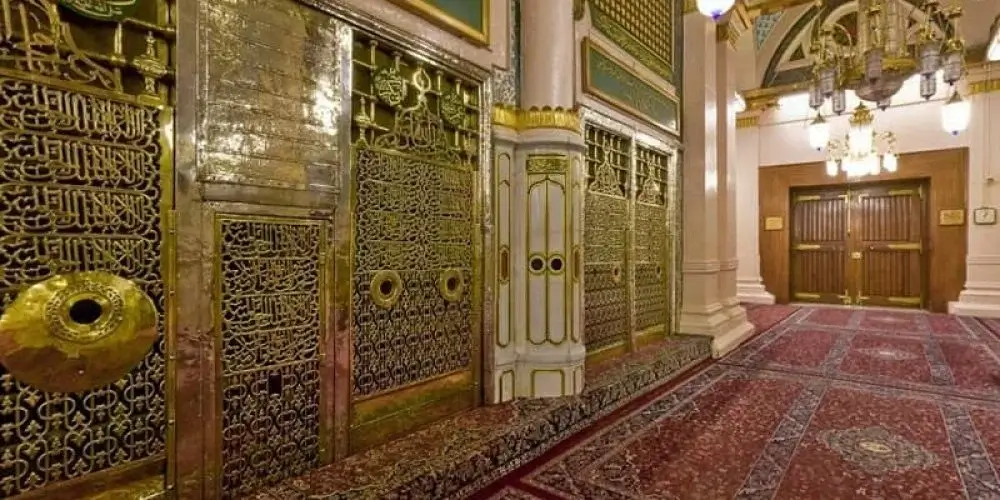
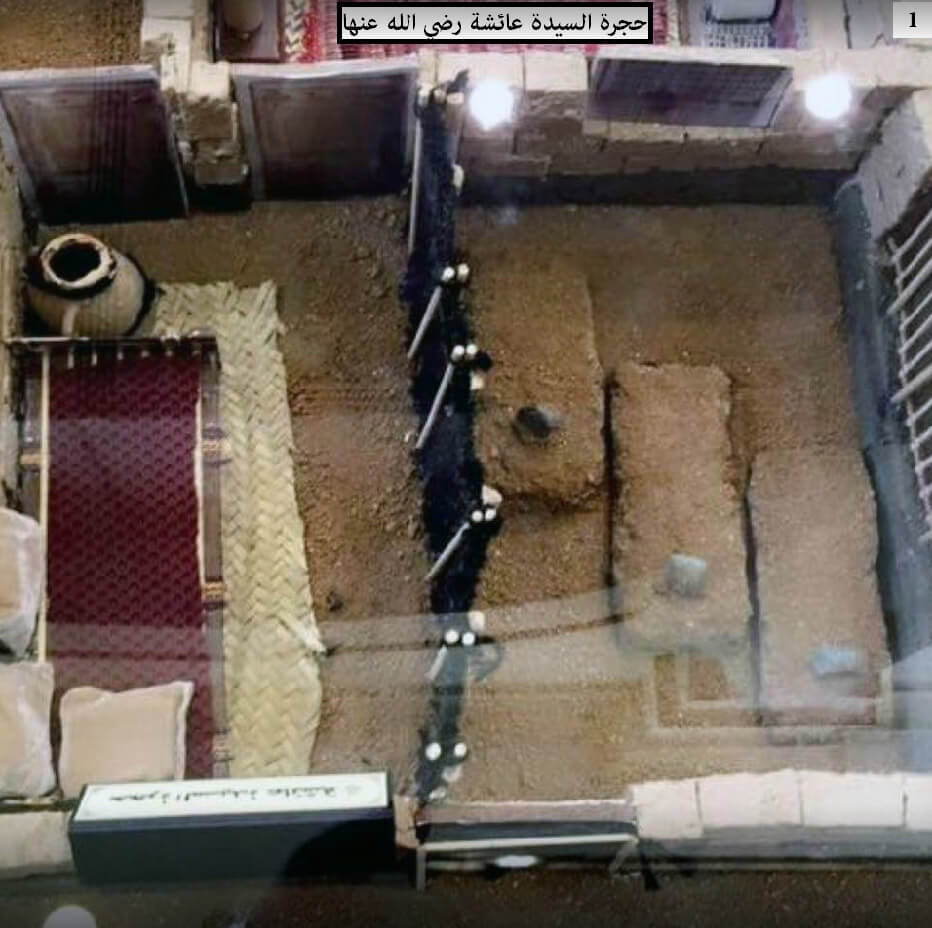
The Prophet ﷺ is buried inside Al-Hujrah Al-Sharifah, which was originally the house of Aisha bint Abu Bakr (رضي الله عنها). This chamber is situated on the south-eastern side of Masjid an-Nabawi, beneath the iconic Green Dome, a universally recognized symbol of Madinah.
The Prophet ﷺ was buried exactly where he passed away, following the established prophetic principle that prophets are buried where they die. Over time, as Masjid an-Nabawi expanded, the chamber was respectfully enclosed within the mosque structure while remaining fully sealed and protected.
Who Is Buried Inside the Sacred Chamber?
Inside the Sacred Chamber are three graves:
- Prophet Muhammad ﷺ
- Abu Bakr al-Siddiq (رضي الله عنه), the first Caliph of Islam
- Umar ibn al-Khattab (رضي الله عنه), the second Caliph
According to the majority scholarly view, the Prophet’s ﷺ grave is closest to the southern wall. Abu Bakr’s head is aligned with the Prophet’s shoulders, and Umar’s head is aligned with Abu Bakr’s shoulders. The graves themselves are not visible, as they are enclosed behind multiple protective walls with no doors or windows.
What Is the Mawajaha and How Do Visitors Offer Salam?
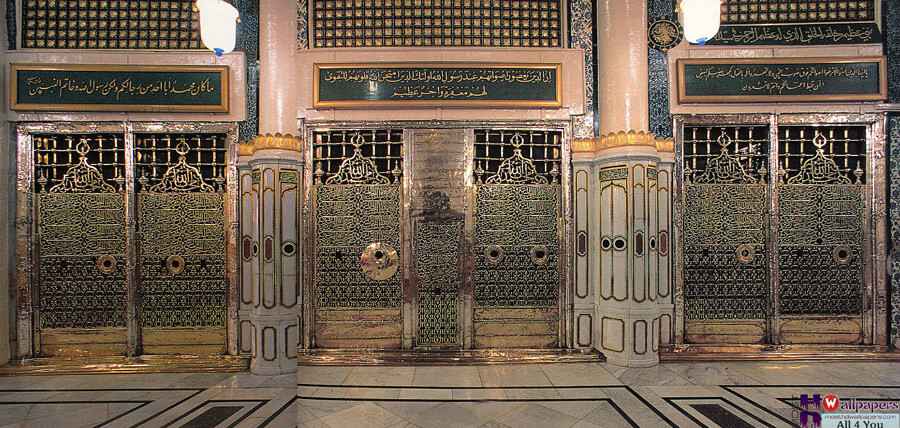
The Mawajaha is the area inside the mosque where visitors stand to offer salam to the Prophet ﷺ and his companions. It is marked by a golden metal grill facing the Sacred Chamber.
There are three round openings:
- The left opening aligns with the Prophet Muhammad ﷺ
- The middle opening aligns with Abu Bakr
- The right opening aligns with Umar
Above the grill is the Quranic verse from Surah al-Hujurat (49:3) reminding believers to lower their voices before the Messenger of Allah, reinforcing the spiritual etiquette of humility and reverence.
How to Perform Ziyarat at the Prophet’s Grave
Ziyarat is a recommended Sunnah, not an obligation of Hajj or Umrah, but one of the most spiritually meaningful acts in Madinah.
A visitor should stand calmly at the Mawajaha and say, in a low and respectful voice:
“As-salāmu ‘alayka ayyuhannabiyyu wa raḥmatullāhi wa barakātuh.”
Then, move slightly to the right to greet Abu Bakr, and again to greet Umar, with brief salutations. Long speeches, raised voices, or emotional displays are discouraged.
After offering salam, one may step away, face the Qiblah, and make dua to Allah alone, asking for His mercy, forgiveness, and acceptance.
Islamic Etiquette (Adab) When Visiting the Prophet ﷺ
Visitors are expected to observe proper Islamic manners:
- Enter Masjid an-Nabawi with wudu, humility, and sincere intention
- Maintain silence and avoid crowding or pushing
- Do not touch, kiss, or wipe the grill for blessings
- Do not make dua to the Prophet ﷺ; rather, send salam and supplicate to Allah
Scholars emphasize that love for the Prophet ﷺ is shown through obedience, respect, and correct belief, not through innovations or prohibited acts.
History of the Prophet’s Grave and the Sacred Chamber

After the Prophet’s ﷺ burial in 11 AH (632 CE), Abu Bakr was buried beside him two years later, followed by Umar ten years after that. Aisha (رضي الله عنها) continued living in the house until her passing, later partitioning the space out of respect.
During the Umayyad expansion, the houses of the wives were incorporated into the mosque. Subsequent Mamluk and Ottoman rulers reinforced the chamber with multiple walls, built the pentagonal structure to prevent imitation of the Kaaba, and later erected the Green Dome, painted green in 1228 AH (1813 CE).
The chamber has remained sealed for centuries, preserving the sanctity and dignity of the Prophet ﷺ.
Is Visiting the Prophet’s Grave Part of Hajj or Umrah?
Visiting the Prophet’s ﷺ grave is not a ritual requirement, but it is strongly recommended and widely practiced by scholars and pilgrims throughout Islamic history. The intention should always be ziyārah and salam, not worship of the grave.
Practical Travel Advice for Visiting Masjid an-Nabawi
Access to the Rawdah area is regulated through the Nusuk platform, and visitors should check current permit requirements before planning.
For pilgrims performing Umrah or visiting Madinah, reliable transportation makes the journey easier and more comfortable. Many visitors choose professional Umrah taxi and Madinah transport services to travel smoothly between Makkah, Madinah, hotels, and ziyarat locations, especially for families and elderly pilgrims. A trusted local taxi service can significantly enhance the overall spiritual experience by reducing logistical stress.
FAQs
Is the actual grave of Prophet Muhammad ﷺ visible?
No. The graves are fully enclosed and cannot be seen.
Can women visit the Prophet’s grave?
Yes. Women may visit Masjid an-Nabawi and offer salam from the designated areas.
Is there space for another grave inside the chamber?
Historical narrations mention a reserved space, but it remains untouched.
Conclusion
The grave of Prophet Muhammad ﷺ is not only a physical location but a profound spiritual symbol of Islam’s message, humility, and mercy. Preserved within Al-Hujrah Al-Sharifah in Masjid an-Nabawi, it stands as a reminder of the Prophet’s ﷺ life, sacrifice, and guidance for humanity.
Visiting Madinah, sending salam upon the Messenger of Allah ﷺ, and praying in his mosque is among the most cherished experiences for Muslims worldwide. By observing correct etiquette, authentic belief, and sincere intention, visitors honor the Prophet ﷺ in the manner he deserves—through respect, obedience, and love.
References
| Narrated in Sunan Abu Dawud |
| At-Tabaqat Al-Kabir by Ibn Saad, Vol. 2, P. 267 |
| As-Shari’a by Al-Ajiri, Vol. 5, P. 391 |
| Fath Al-Bari, Vol. 3, P. 248 |
| Wafa Al-Wafa, Vol. 2, P. 170 |
| Wafa Al-Wafa, Vol. 2, P. 122 |
| Sunan Al-Tirmidhi, Vol. 6, P. 12, No. 3617 |
| Narrated in Sunan al-Nasa’i |
| Akhbar Al-Madinah, P. 91 |
| Fath Al-Bari, Vol. 3, P. 257 |
| Narrated in Sahih al-Bukhari |
| Wafa Al-Wafa, Vol. 2, P. 112-113 |
| Wafa Al-Wafa, Vol. 2, P. 169-170 |
| Narrated in Sunan Ibn Majah |
| Sahih Al-Bukhari, Vol. 3, P. 253, No. 1387 |
| Sahih Muslim, Vol. 4, P. 326, No. 2352 |
| Musnad Abu Ya’la, Vol. 4, P. 423, No. 2730 |
| Akhbar Al-Madinah by Ibn An-Najjar, P. 142-144 |
| Tarikh Al-Madinah by Ibn Schabba, Vol. 3, P. 918 |

Zeeshan is a professional driver and tour guide who has been living and driving in Saudi Arabia for the past 5 years. With deep knowledge of the roads, landmarks, and Ziyarat locations across Makkah, Madinah, Jeddah, and Taif, he helps pilgrims and travelers enjoy safe, smooth, and well-organized journeys. His experience in Umrah transport, city tours, and airport transfers makes him a trusted expert for visitors exploring Saudi Arabia.