



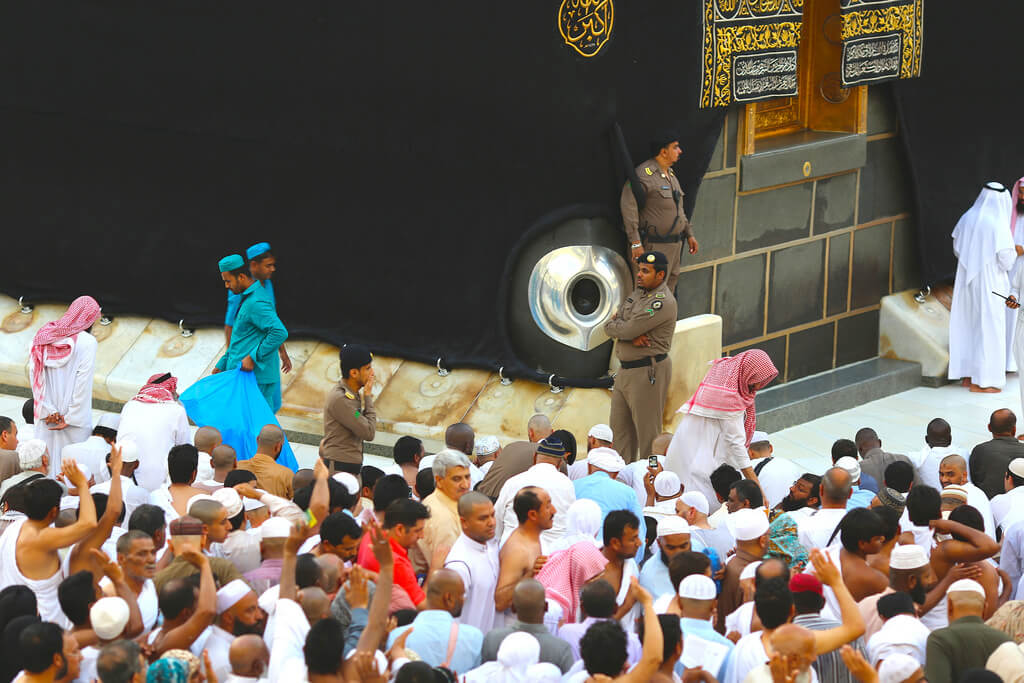
Hajar al-Aswad, also known as Hajre Aswad or the Black Stone, is one of the most revered sacred relics in Islam. It is set into the eastern corner of the Kaaba in Masjid al-Haram, Makkah, marking the starting and ending point of Tawaf, the circumambulation performed during Umrah and Hajj. For over millennia, prophets, companions, scholars, and millions of pilgrims have passed by this blessed stone as part of their worship of Allah.
Origin of Hajar al-Aswad in Islamic Belief
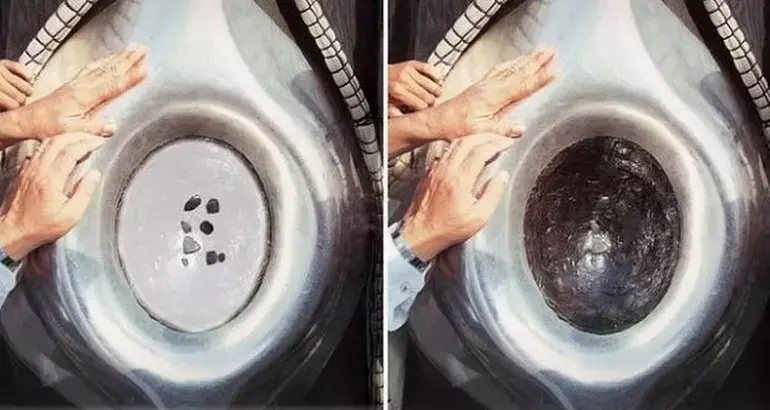
Islamic tradition holds that Hajar al-Aswad was sent down from Jannah (Paradise). According to authentic narrations, the stone was originally pure white, brighter than milk, but gradually turned black due to the sins of humanity. It was entrusted to Prophet Ibrahim (AS) and placed at the Kaaba during its original construction, making it deeply connected to the foundation of monotheistic worship.
This origin establishes Hajar al-Aswad not as an object of worship, but as a divinely honored sign, linked to obedience, covenant, and remembrance of Allah.
Spiritual and Religious Significance
Hajar al-Aswad holds immense symbolic value in Islam. It represents a point of initiation in worship, not a source of divine power itself. The Prophet Muhammad (ﷺ) taught the Ummah through practice that honoring the stone is an act of following Sunnah, not stone veneration.
Authentic hadith mention that the stone will bear witness on the Day of Judgment for those who approached it with sincerity and faith. At the same time, Islamic scholarship consistently emphasizes that benefit and harm come only by Allah’s will, a principle clearly demonstrated by the companions.
Physical Description and Present Condition
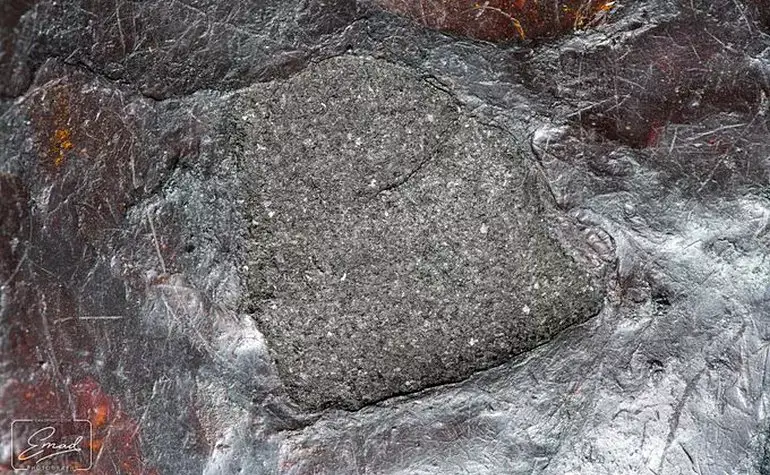
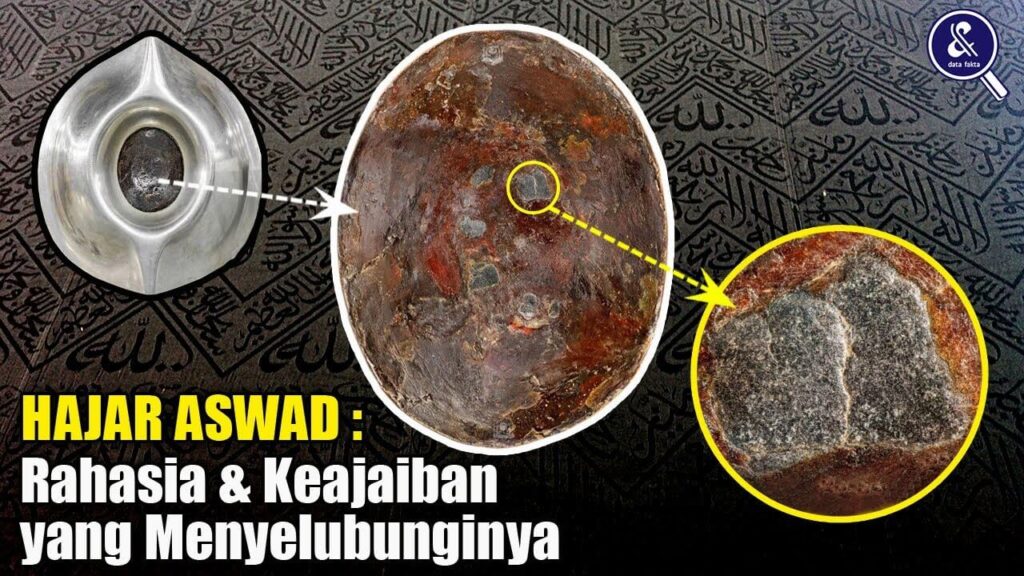
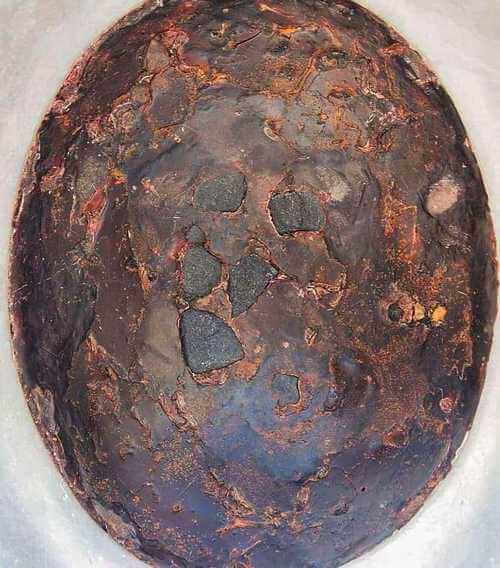
Today, Hajar al-Aswad is not a single intact stone. Due to historical incidents, fires, and crowd pressure, it consists of eight small fragments, embedded together and secured with a bonding substance. These fragments are housed within a polished silver frame, which serves to protect the stone from further damage.
The stone is positioned approximately 1.5 meters above ground level in the corner known as al-Rukn al-Aswad, clearly visible to pilgrims performing Tawaf.
Role of Hajar al-Aswad in Tawaf
Hajar al-Aswad defines the beginning and completion of each Tawaf circuit. Pilgrims align themselves with the stone and make intention before starting. The Sunnah act known as Istilam involves kissing the stone, touching it, or gesturing toward it when physical access is not possible.
Islamic teachings are clear that kissing the stone is not obligatory. When crowds are dense, simply pointing toward Hajar al-Aswad while reciting Takbeer fulfills the Sunnah without causing harm.
Historical Events Related to Hajar al-Aswad
One of the most significant moments in the stone’s history occurred before Prophethood, when the Quraysh rebuilt the Kaaba. A dispute nearly led to war over who would place the Black Stone. Prophet Muhammad (ﷺ) resolved the conflict with wisdom by placing the stone on a cloth and allowing each tribe to lift it together, then setting it in place himself.
In 930 CE, the stone was stolen by the Qarmatians, who removed it from Makkah and took it to Bahrain. After more than two decades, it was returned and reinstated in its original position. Over centuries, it has endured fires, sieges, and structural damage, resulting in its current fragmented state.
Correct Islamic Etiquette When Approaching Hajar al-Aswad
Islam strictly forbids causing harm. While honoring Hajar al-Aswad is Sunnah, pushing, injuring, or endangering others is haram. Scholars emphasize that spiritual reward lies in intention and obedience, not physical contact.
When access is difficult, pilgrims may:
- Point toward the stone
- Raise the hand in acknowledgment
- Continue Tawaf calmly without disruption
This balance reflects Islam’s emphasis on mercy, discipline, and communal respect.
Common Questions About Hajar al-Aswad
Many ask why Muslims kiss the Black Stone. The answer lies in following the Prophet (ﷺ), not attributing divinity to the stone. Others question why it turned black, which Islamic tradition explains as a symbolic transformation linked to human sin, not a physical or scientific function.
The companions clarified these matters early on to protect Islamic belief from misunderstanding, reinforcing pure Tawheed (monotheism).
Visiting Hajar al-Aswad During Umrah and Hajj
For pilgrims performing Umrah or Hajj, seeing Hajar al-Aswad is often a deeply emotional moment. Given the scale of Masjid al-Haram and the density of crowds, proper planning and reliable transportation play a crucial role in a smooth pilgrimage experience.
Pilgrims arriving in Makkah benefit greatly from professional Umrah taxi services, airport transfers, and inter-city transport that understand pilgrimage schedules and religious needs. Reliable transport allows worshippers to focus on devotion rather than logistics, especially when moving between Jeddah, Makkah, Madinah, and sacred sites.
Conclusion
Hajar al-Aswad is one of Islam’s most profound sacred symbols, deeply rooted in prophetic history, spiritual meaning, and ritual practice. It is not worshipped, but respected as a sign connected to obedience, unity, and remembrance of Allah. Understanding its origin, role, and etiquette helps pilgrims approach it with correct belief and humility.
For those planning Umrah or Hajj, combining sound religious knowledge with well-organized travel and transport services ensures a journey that is spiritually fulfilling, safe, and focused on worship—just as Islam intends.

Zeeshan is a professional driver and tour guide who has been living and driving in Saudi Arabia for the past 5 years. With deep knowledge of the roads, landmarks, and Ziyarat locations across Makkah, Madinah, Jeddah, and Taif, he helps pilgrims and travelers enjoy safe, smooth, and well-organized journeys. His experience in Umrah transport, city tours, and airport transfers makes him a trusted expert for visitors exploring Saudi Arabia.