



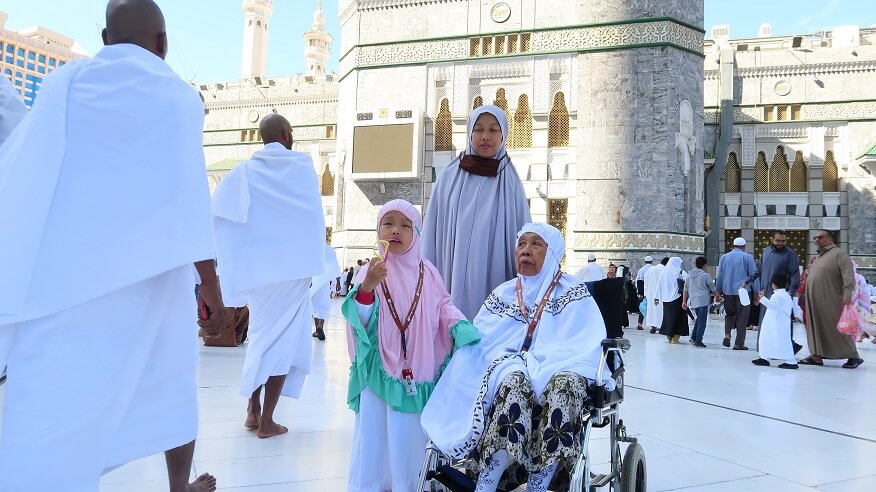
Clothing during Umrah and Hajj is not merely a matter of comfort—it is a core component of Islamic etiquette, ritual compliance, and personal well-being. Pilgrims must balance religious requirements, modesty, and practical comfort, especially given the demanding physical nature of the pilgrimage and the hot Saudi Arabian climate.
Understanding what to wear, when to wear it, and why it matters ensures your pilgrimage remains spiritually focused and physically manageable.
Ihram Clothing Rules Explained
Ihram Clothing for Men
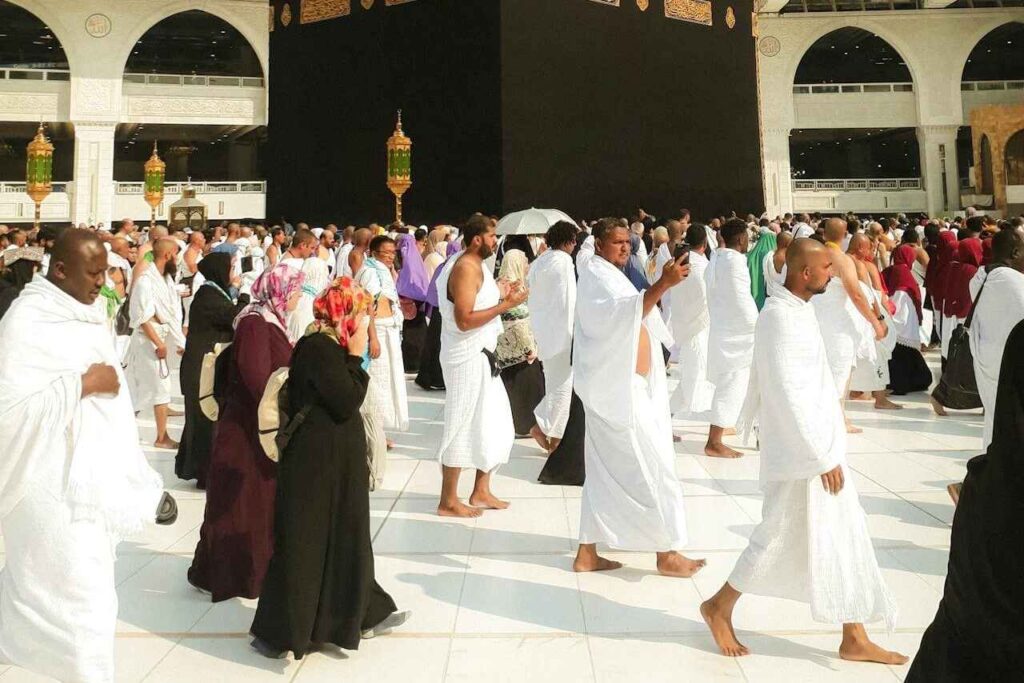
When entering the state of Ihram, men must wear two plain, white, unstitched cloths:
- Izar: Wrapped around the waist, covering from the navel to the ankles
- Rida: Draped over the upper body and shoulders
There are clear prohibitions while in Ihram:
- No stitched clothing
- No underwear, socks, or head coverings
- No perfumes or scented products
- The right shoulder is uncovered only during Tawaf
It is strongly recommended to carry an extra Ihram set, as garments may become impure due to sweat or crowds. Ihram cloth can later be reused as towels or blankets, making it a practical choice beyond rituals.
Recommended: Umrah Taxi Service
Ihram Clothing for Women
Women do not have a fixed Ihram uniform. Instead, the emphasis is on modesty and simplicity:
- Loose-fitting, non-transparent clothing
- No adornment or beautification
- Any color is permitted if it does not attract attention
- A hijab or headscarf is mandatory
Many women prefer an abaya due to its comfort, coverage, and suitability for the climate. Breathable cotton or flowy fabrics help manage heat and long walking hours. Unlike men, women may wear stitched garments and socks.
Everyday Clothing Outside the State of Ihram
Men’s Daily Clothing in Makkah and Madinah
Once Ihram restrictions are lifted, men may wear:
- Saudi thobe (jubbah)
- Shalwar qameez
- Loose shirts with breathable trousers
These garments are widely available in Saudi Arabia and are ideal for prayer, walking, and daily activities.
Women’s Daily Clothing and Modesty Requirements
For women, daily clothing should:
- Be loose and opaque
- Avoid body definition
- Be free from fragrance
An abaya remains the most practical option. Underneath, lightweight cotton slips or loose trousers prevent chafing and improve comfort. Soft, airy headscarves are recommended for extended wear.
Climate-Based Clothing Guidance
Makkah Climate and Fabric Selection
Makkah is hot year-round, with intense sun exposure. Pilgrims should prioritize:
- Cotton, linen, or bamboo fabrics
- Light colors to reflect heat
- Minimal layering
Generally, one outfit per day is sufficient, as clothes dry quickly and frequent washing is common.
Madinah Climate and Seasonal Adjustments
Madinah experiences cooler temperatures, especially:
- Early mornings
- Evenings
- Winter months (November–February)
A light sweater or jacket is advisable during these periods.
Footwear Guidelines for Umrah and Hajj
Footwear While in Ihram
Footwear plays a critical role in preventing blisters and fatigue.
- Men must wear sandals that expose the ankles and instep (Hanafi view)
- Women may wear any comfortable footwear, including sneakers
Avoid brand-new shoes. Footwear should be broken in weeks before travel.
Footwear for Walking and Rami
For rites such as Rami, trainers or sneakers provide better grip and cushioning. However, they are less practical inside the Haram due to storage inconvenience. Lightweight sandals that are easy to carry are ideal for mosque visits.
Laundry and Clothing Maintenance
Laundry services may be:
- Included in Umrah/Hajj packages
- Available at hotels or local laundries (often expensive during peak season)
Pilgrims who wash clothes themselves should ensure:
- Detergents are fragrance-free while in Ihram
- Lightweight garments for quick drying
Toiletries and Ihram Compliance
All personal care items used during Ihram must be unscented, including:
- Soap and shampoo
- Deodorant
- Wet wipes and hand sanitizer
Basic hygiene tools such as towels, toothbrushes, razors, and sanitary items should be packed in advance for convenience.
Smart Packing Tips for Pilgrims
- Choose wrinkle-resistant clothing
- Carry a small shoe bag for mosque entry
- Use waist or neck pouches for valuables
- Pack fewer items and wash frequently
Efficient packing reduces physical strain and improves mobility.
FAQs
Can women wear any color for Umrah?
Yes. Any color is permissible as long as it is modest, non-transparent, and not for beautification.
Can you wear shoes during Sa’i (Safa and Marwa)?
Yes. Comfortable footwear is allowed, especially due to long walking distances.
What should women wear under an abaya for Umrah?
Lightweight cotton slips, loose trousers, or leggings to prevent friction and improve comfort.
Is stitched clothing allowed after Ihram?
Yes. Once Ihram ends, normal modest clothing may be worn.
Final Note
This guide is designed to provide clear, practical, and jurisprudentially sound guidance on clothing for Umrah and Hajj. By aligning religious requirements with climate realities and human comfort, pilgrims can focus fully on worship—confident, prepared, and compliant.

Zeeshan is a professional driver and tour guide who has been living and driving in Saudi Arabia for the past 5 years. With deep knowledge of the roads, landmarks, and Ziyarat locations across Makkah, Madinah, Jeddah, and Taif, he helps pilgrims and travelers enjoy safe, smooth, and well-organized journeys. His experience in Umrah transport, city tours, and airport transfers makes him a trusted expert for visitors exploring Saudi Arabia.