



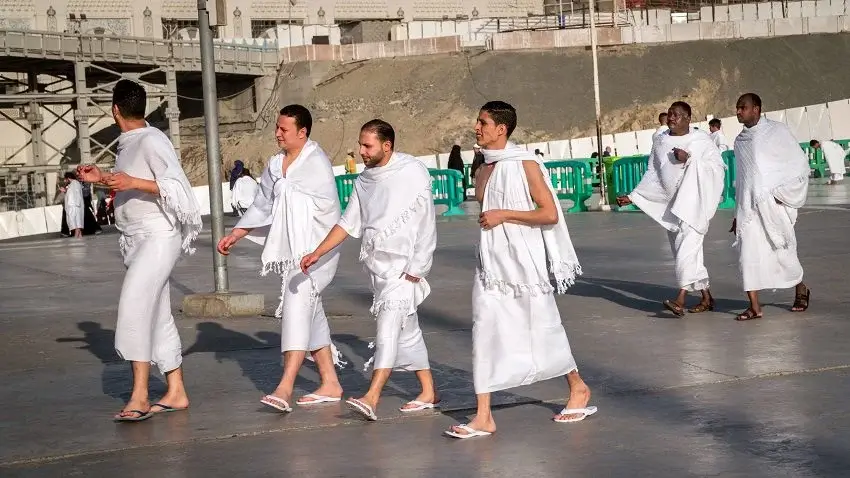
Ihram is one of the most fundamental concepts in the Islamic pilgrimage. It represents a sacred spiritual state that a Muslim must enter before performing Hajj or Umrah. Although commonly associated with the white garments worn by pilgrims, Ihram is far more than clothing. It is a comprehensive condition of worship, discipline, intention, and moral restraint, marking the pilgrim’s formal entry into the rites of pilgrimage.
Once a Muslim enters Ihram, they willingly place themselves under a set of divine restrictions, temporarily giving up certain lawful actions in order to achieve spiritual purity, humility, and closeness to Allah.
What Is Ihram?
Linguistically, the word Ihram comes from the Arabic root ḥ-r-m, which conveys the meaning of making something forbidden. In Islamic law, Ihram refers to a state of sanctity that begins when a pilgrim makes a sincere intention (niyyah) to perform Hajj or Umrah and continues until specific rites are completed.
A person in this state is known as a Muhrim, meaning someone who has made certain permissible acts forbidden upon themselves purely for the sake of worship. While clothing is an outward symbol of Ihram, the true essence of Ihram lies in obedience, restraint, and awareness of Allah throughout the pilgrimage.
Recommended: What Is Talbiyyah?
The Spiritual Significance of Ihram
Ihram is deeply symbolic and transformative. Spiritually, it strips the pilgrim of worldly identity and status. Wealth, profession, nationality, and social rank become irrelevant as millions of pilgrims stand equal before Allah.
By adopting simple attire and controlled behavior, the pilgrim trains the soul in patience, humility, and submission. Anger, desire, arguments, and distractions are restrained, allowing the heart to focus entirely on remembrance and devotion. Ihram is therefore not merely an external requirement, but an internal commitment to higher moral conduct and sincere worship.
When and Where Ihram Must Be Entered
Ihram must be assumed before crossing the Miqat, which is a set of fixed geographical boundaries surrounding Makkah. These boundaries were designated by the Prophet ﷺ for pilgrims approaching from different directions.
Crossing the Miqat without entering Ihram is a serious violation. Although the pilgrimage remains valid, expiation (Fidyah) becomes obligatory. Islamic scholars agree on this ruling, emphasizing the sanctity of the Miqat as the formal gateway to pilgrimage.
For those traveling by air, pilgrims typically change into Ihram clothing before departure or during the flight. The intention is then made as the aircraft approaches the Miqat. Airlines operating pilgrimage routes often announce this moment to passengers.
Pilgrims traveling first to Madinah do not enter Ihram immediately. They remain in normal clothing until they depart Madinah for Makkah, at which point Ihram is assumed from Masjid Dhul Hulayfah, the Miqat for Madinah.
Recommended: Masjid-e-Nabawi Madinah
Preparation Before Entering the State of Ihram
Before entering Ihram, Islam encourages both physical cleanliness and mental readiness. Pilgrims are instructed to groom themselves by trimming nails, removing unwanted body hair, and ensuring general cleanliness.
A ritual bath (ghusl) is strongly recommended and is considered a Sunnah for men, women, and even those experiencing menstruation or postnatal bleeding. If ghusl is not possible, ablution (wudu) suffices.
After changing into Ihram clothing, it is recommended to perform two voluntary units of prayer, known as Salah al-Ihram, before making the intention. This prayer is not obligatory, but it prepares the heart for the sacred commitment about to be made.
Recommended: Masjid Al-Haram in Makkah
Ihram Clothing Explained
Ihram for Men
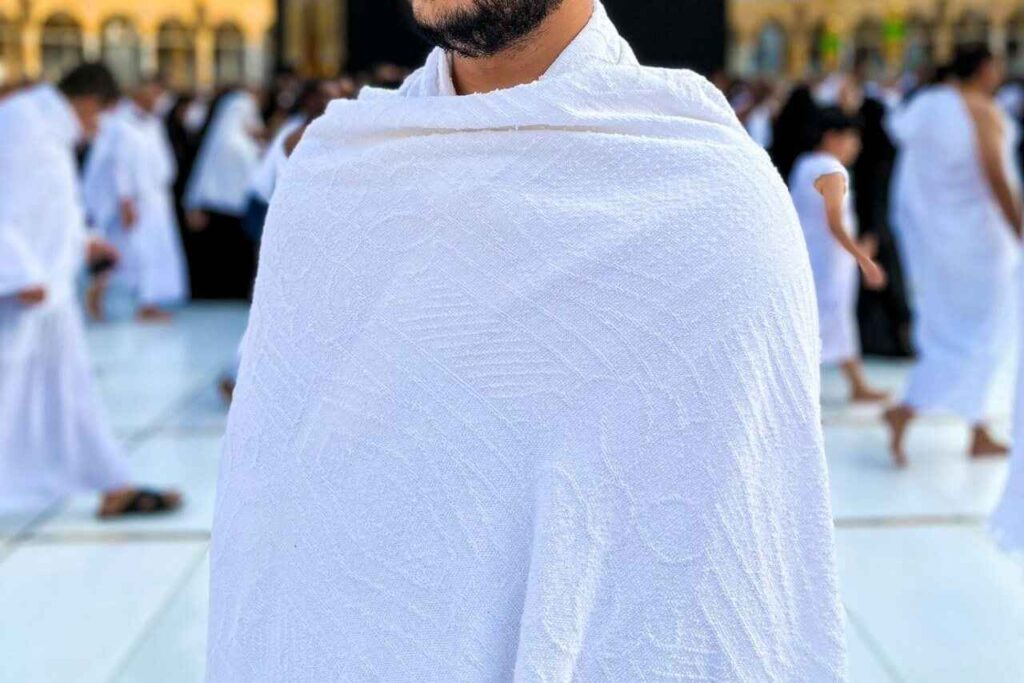
For men, Ihram clothing consists of two unstitched white cloths. The lower garment, known as the izar, wraps around the waist and covers the area from the navel to below the knees. The upper garment, known as the rida, is draped over the shoulders and upper body.
Men are prohibited from wearing stitched or tailored clothing, underwear, or head coverings. Footwear must leave the ankles and upper part of the foot exposed. These rules are not about discomfort, but about removing distinctions of fashion, wealth, and identity.
Ihram for Women
Women do not have a specific uniform for Ihram. They may wear any modest Islamic clothing that fully covers the body while leaving the face and hands uncovered. Clothing should not be decorative or attention-drawing.
Women in menstruation may enter Ihram, make intention, and recite Talbiyah. They are allowed to perform all pilgrimage rites except Tawaf, which must be delayed until purification.
Niyyah: The Core of Ihram
The niyyah, or intention, is what formally initiates the state of Ihram. Without intention, wearing Ihram garments alone does not place a person in Ihram.
The intention is made in the heart and may be spoken verbally. The pilgrim specifies whether the Ihram is for Umrah, Hajj, or both combined. Once Ihram has begun, this intention cannot be altered.
Islam also allows a conditional intention, known as Ishtirat, for those who fear illness or obstruction. This condition allows the pilgrim to exit Ihram without penalty if genuinely prevented from completing the pilgrimage.
Talbiyah: The Declaration of Devotion
Immediately after making the intention, the pilgrim recites the Talbiyah, a powerful declaration of submission to Allah. Through Talbiyah, the pilgrim announces their readiness to obey and worship Allah alone.
Men recite the Talbiyah aloud, while women recite it softly. The Talbiyah continues throughout the pilgrimage at various moments, such as while traveling, walking, or changing location.
For Umrah, the Talbiyah ends when Tawaf begins. For Hajj, it continues until the stoning of Jamrat al-Aqabah on the Day of Sacrifice.
Prohibitions While in Ihram
Once in Ihram, the Muhrim must observe specific prohibitions. These include refraining from cutting hair or nails, using perfume or scented products, engaging in marital relations, or hunting animals.
Men are prohibited from wearing stitched clothing or covering the head, while women may not cover the face directly. The environment of the Haram is also protected, meaning plants and animals within its boundaries must not be harmed.
These prohibitions cultivate discipline and constant awareness of Allah, transforming ordinary actions into acts of worship through restraint.
Permissible Actions and Practical Ease
Despite its restrictions, Ihram is not meant to cause hardship. Pilgrims may bathe using unscented products, change their Ihram garments, carry bags, use umbrellas for shade, and seek medical treatment if needed.
Islamic law balances sanctity with mercy, allowing necessary actions while maintaining the dignity of the sacred state.
Violations, Penalties, and Fidyah
If a pilgrim violates the rules of Ihram, compensation known as Fidyah becomes obligatory. The form of expiation depends on the nature and seriousness of the violation and may involve charity, fasting, or animal sacrifice.
Fidyah is not a punishment but a means of spiritual correction, reinforcing respect for the sacred boundaries of the pilgrimage.
Exiting the State of Ihram
Ihram ends when the required rites are completed. For Umrah, this occurs after Tawaf, Sa’i, and trimming or shaving the hair. For Hajj, Ihram is released in stages, with full release occurring after the major rites are completed.
At this point, the pilgrim returns to normal lawful activities, having completed one of the most profound acts of worship in Islam.

Zeeshan is a professional driver and tour guide who has been living and driving in Saudi Arabia for the past 5 years. With deep knowledge of the roads, landmarks, and Ziyarat locations across Makkah, Madinah, Jeddah, and Taif, he helps pilgrims and travelers enjoy safe, smooth, and well-organized journeys. His experience in Umrah transport, city tours, and airport transfers makes him a trusted expert for visitors exploring Saudi Arabia.